
Senior Belgaum advocate Ravindra Totigera has successfully gathered more than 10,000 historical documents to substantiate the claim that 814 villages and towns bordering the state line are part of Karnataka. The Karnataka-Maharashtra border dispute was elevated to the Supreme Court in 2004, where the Maharashtra government argued that several villages and towns currently within Karnataka’s jurisdiction were previously part of its state and should be returned. In response, the Karnataka government rejected these claims as false and is actively engaged in collecting evidence to support its position.
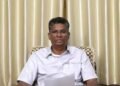
Totigera, a 51-year-old advocate from Turanur village in Ramdurg taluk, holds degrees in BA and LLB. Although his professional background is in law, he has a deep passion for Kannada literature and an unwavering love for his native land, which led him to dedicate two decades to this archival work. His initial inspiration came from S.V. Patil, a senior Belgaum lawyer who served as an assistant to Meher Chand Mahajan, the chairman of the Mahajan Commission appointed by the central government to report on the border issue. Totigera worked under Patil, who encouraged him to collect border-related documents; following Patil’s death, Totigera became even more active in this endeavor.
The collected documents provide strong evidence that 814 villages, including those in Khanapur, Belgaum, Nippani, Bhalki in Bidar, and Karwar in Uttara Kannada, belong to Karnataka. Totigera stated that these records will play a crucial and decisive role in securing a favorable verdict for Karnataka in the Supreme Court. He noted that the documents span from 1837 to 1956, the period of Karnataka’s unification, proving that Belgaum was an integral part of Karnataka. The collection includes police appointment letters, court summons, lease deeds, sub-registrar office records, and school certificates issued by the Bombay Provincial Government, all of which were printed in pure Kannada. Additionally, the archive contains evidence that the Bombay government conducted official correspondence with Belgaum in Kannada, along with local self-government gazettes published in the language by the Bombay Local Self Government.
Notable items in the collection include an invitation letter and a thank-you acknowledgment published in pure Kannada by the Queen of England in 1911, addressed to local rulers and state representatives. The archive also features a summons issued by the Bombay High Court in 1920, a primary school certificate from the Bombay Education Department in 1944, and a case copy from the Belgaum Sub-Judge Court in 1941. A significant document is an order dated April 20, 1837, issued by John A. Dunlop, the first District Collector and Magistrate of Belgaum, which mandated Kannada as the administrative and business language in the region. Totigera has stated that he previously submitted these documents to the former Karnataka-Maharashtra Special Legal Border Advisory Committee and has since presented them to the current Border Protection Commission. He acknowledged the assistance of individuals including Shrishail Kupte, Sudhir Nirvani, Kumar Saravade, Shivanand Eeranagoudr, Prof. M.S. Inchal, and Shivanagoud Bhimagoud Patil, among others, in acquiring these records.