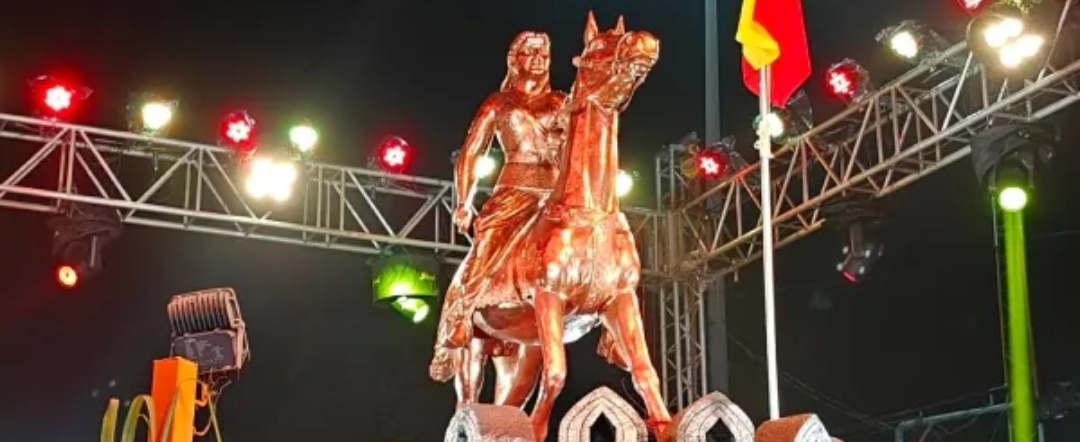
Belagavi marked the start of Karnataka Rajyotsava with vibrant midnight celebrations at Rani Chennamma Circle on November 1st. A large crowd of Kannada supporters gathered to honor the occasion, and as the clock struck midnight, cheers and spirited chants filled the air. Youth and adults alike waved red and yellow Kannada flags and released balloons skyward, creating a lively, colorful scene. Celebrations began officially with a cake-cutting ceremony and an impressive fireworks display hosted by local organizations.
Attendees exchanged warm greetings in the glowing light of mobile torches. The streets around Chennamma Circle dazzled with bright lights, decorative banners, floral displays, welcome arches, and large musical instruments. The grand procession moved forward, enhanced by dancing laser lights, DJ music, and traditional Kannada songs. The youth carried photos of late actor Puneeth Rajkumar, joyfully dancing in his honor, showcasing the celebration’s cultural pride.
Minister Lakshmi Hebbalkar, on the 69th Kannada Rajyotsava, conveyed her wishes to the district, emphasizing the importance of honoring Karnataka’s language, art, culture, and heritage. She encouraged people to remember those who contributed to Karnataka’s development, urging Kannadigas to protect and cultivate their rich linguistic and cultural legacy.
The significance of the Kannada language, reflected in its eight Jnanpith Awards, is deeply cherished in Karnataka. Hebbalkar highlighted the state’s 2,000-year history, as mentioned in “Kavirajamarga,” noting Kannada’s historical expanse from the Kaveri to the Godavari. As Gandhi advocated, she emphasized respecting and prioritizing one’s mother tongue.
Belagavi, known for its diversity, has made remarkable contributions to Kannada literature, culture, and the arts. Hebbalkar recalled the contributions of Basavanna’s Sarana movement and the unification struggle led by Aluru Venkatarao. The former Chief Minister, Late D. Devaraj Urs, renamed Mysore as Karnataka on November 1, 1973, a milestone in the journey that began with linguistic reorganization in 1956.