
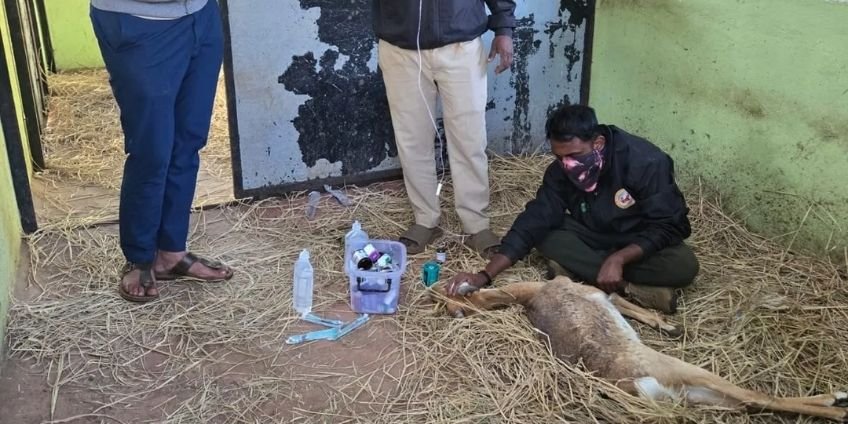
Belagavi is grappling with a serious wildlife health emergency after the Karnataka Zoo Authority confirmed that Hemorrhagic Septicemia (HS), a fast-acting and highly lethal bacterial disease, was responsible for the death of 31 blackbucks at the Kittur Rani Chennamma Mini Zoo.
A high-level expert team led by Authority Member Secretary Sunil Panwal and senior wildlife veterinarian Dr. Prayag inspected the facility. After reviewing enclosure conditions, mortality patterns, and preliminary lab findings, the committee verified an HS outbreak and directed the zoo to enforce strict biosecurity, intensive sanitation, and 24/7 monitoring of herbivore enclosures. Officials clarified that carnivores remain unaffected by the disease.
Following the confirmation, the State Government imposed a full quarantine on the zoo. Forest Department teams, in coordination with other departments, have launched emergency biosafety protocols. The seven surviving blackbucks have been shifted to a half-acre enclosure for isolation, where veterinarians are administering preventive treatment and maintaining constant surveillance.
Chief Conservator of Forests Manjunath Chauhan said containment activity has been extended outside the zoo premises as well. “Disinfectants are being sprayed across the zoo and nearby areas. Village heralders are warning cattle owners and shepherds to protect their livestock using disinfectants,” he said. An alert has been issued to villages around the Bhutaramanahatti zoo over the potential spread of the infection linked to the recent blackbuck deaths.
Hemorrhagic Septicemia can kill infected herbivores within hours, making rapid containment essential to prevent its spread to other wildlife and domestic animals in adjoining villages.