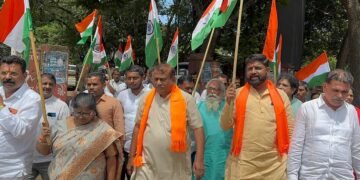
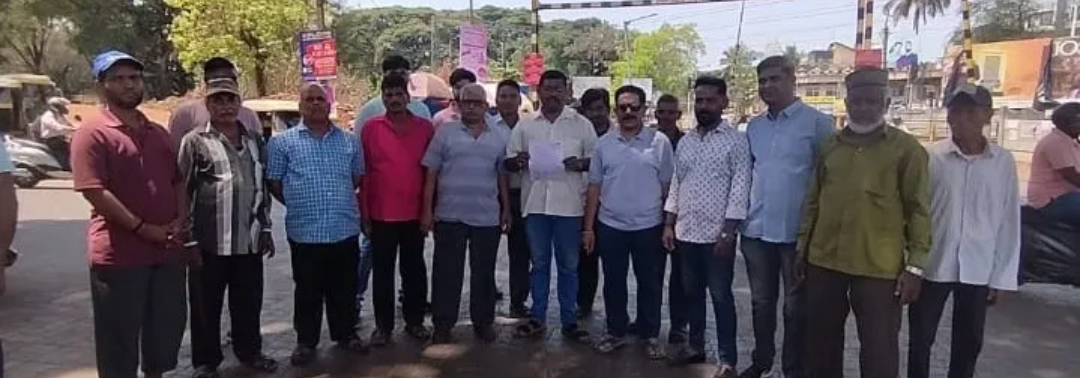
The proposed Railway Overbridge (RoB) at First Gate (LC 383) in Tilakwadi, Belagavi, has drawn sharp criticism from residents and shopkeepers, who are pushing for a Road Under Bridge (RUB) instead. They argue that a RoB would negatively impact businesses, similar to the decline seen near Kapileshwar and Third Gate after overbridges were built there.
Business owners worry about reduced foot traffic and limited accessibility. The recently constructed mall at the former Kala Mandir site would reportedly be left with only a narrow side entry if the RoB is implemented, raising concerns about flawed urban planning. Locals believe an underpass would be a more practical, cost-effective, and sustainable solution.
Construction of the First Gate RoB is on hold until the Second Gate RoB is completed—an undertaking expected to take up to two years.
UNDERPASS
A well-designed underpass would typically require around 365-370 meters in total length, including ramps and the main structure, with a clearance height of 5.5 meters and an excavation depth of roughly 7 meters—based on preliminary estimates.
Although Indian Railways initially aimed to eliminate 2,429 manned level crossings along the Golden Quadrilateral by March 2025, the deadline has since been extended. While safety and efficiency remain the goals, citizens argue that applying a uniform RoB design across all sites without assessing local needs is misguided.
Urban Planning Concerns and Traffic Issues
With work on the Second Gate RoB set to begin shortly, locals are also worried about worsening traffic. The typical RoB design only connects two sides of the railway, but what about commuters traveling from Congress Road to the five schools located just across the track? If they cannot easily access the bridge, they’ll be forced to use Vaccine Depot Road—a narrow, residential lane—causing major congestion.
Residents stress that Belagavi’s urban planning has been lacking. The abandoned RoB project at Tanaji Galli, where local pushback led to the gate being permanently shut, already serves as a cautionary tale. As railways plan to close all level crossings in the next 2–3 years, locals fear a future riddled with poorly planned infrastructure and worsening traffic.
Demand for Inclusive Planning and Dialogue
There’s a growing call for proper consultation and adaptive planning. Citizens insist that blindly following a standard RoB template could result in yet another flawed project, like the Kapileshwar RoB, which is constrained by narrow approach roads.
Locals are urging MLAs, MPs, urban planners, and city officials to hold meaningful discussions before moving forward. With smarter planning and context-sensitive designs, Belagavi can avoid another infrastructure misstep and build a city that’s functional and future-ready.