Belagavi Smart City Ltd. (BSCL) has announced the invitation for proposals for an environmental and social assessment study under the CITIIS 2.0 Programme. The selected agency will assess the city’s solid waste management system, quantify waste generation, and secure environmental clearances to support sustainable urban planning.
The study will cover municipal solid waste (MSW) from households, commercial areas, and institutions, categorizing organic, recyclable, hazardous, and debris waste. The findings will guide integrated waste management strategies, aligning with India’s COP26 climate commitments. Belagavi City Corporation, responsible for civic infrastructure and sanitation, will play a pivotal role in this project. Backed by the French Development Agency (AFD), KfW Development Bank, and the European Union, CITIIS 2.0 aims to promote evidence-based solutions for cleaner cities.
With an anticipated population of 712,000 and 228,000 households by 2025, Belagavi’s rapid urban growth underscores the need for efficient waste management solutions. This request for qualifications marks an essential step toward a greener, sustainable future.
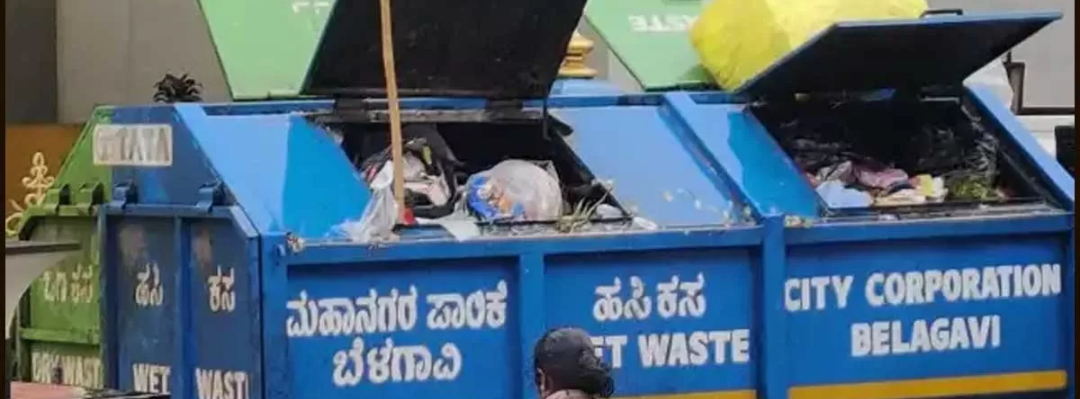
In Belagavi, waste segregation has become a key factor in simplifying garbage disposal and saving costs. The Municipal Corporation, under the leadership of Commissioner Shubha B., initiated strict wet and dry waste segregation, resulting in significant savings of Rs. 10 lakh per month. This initiative, which started amid initial resistance, has now gained traction, with 80% of waste being separated by residents themselves.
In Kundanagari, the segregation of green and dry waste continues smoothly, aided by public awareness. A garbage disposal unit located on a 66-acre site near Turamuri village, established in 2009, processes waste from across the city and surrounding areas. The plant handles 120 tons of green waste and 90 tons of dry waste daily. The Telangana-based Ramki Company has been contracted to process the waste, with a payment structure based on the inert waste remaining after processing. Initially, the corporation paid Rs. 38-40 lakh per month, but due to improved waste segregation, this amount has decreased to Rs. 28-30 lakh, saving Rs. 8-10 lakh monthly.
The garbage processing process includes weight-testing of waste collected by municipal vehicles, followed by decomposition for 21 days, during which EM culture chemicals are used. After decomposition, waste is sorted using a series of machines to separate plastic, glass, and other materials. The result is high-quality fertilizer produced daily, with 16 tons being generated each day, amounting to 450 tons per month.
The corporation is taking steps to further improve the process, including plans to take over the garbage processing once the Ramki contract expires. Currently, 1334 civic employees, including direct pay workers, permanent staff, and group workers, assist in garbage collection and processing. The city operates 172 vehicles for waste collection, including auto tippers, compactors, and suction machines.
Challenges and Solutions in Belagavi’s Garbage Management
Despite the progress, the city faces ongoing challenges. The National Green Tribunal had imposed a fine of Rs. 1.80 crore on the Belagavi Municipal Corporation for improper waste segregation and poor sewerage management. The state government has shouldered this fine for now, but from next year, the city will be responsible for its penalties. The corporation is working hard to avoid further fines by continuing to improve its waste management practices.
Municipal Commissioner Shubha B. emphasized the importance of public cooperation in achieving 100% waste segregation. With rapid urban expansion, Belagavi needs more civic workers, with estimates suggesting that an additional 1500-2000 workers are required to maintain cleanliness and efficiency in waste management. The Municipal Corporation continues to encourage residents to fully participate in the waste segregation process to ensure a cleaner, greener city.