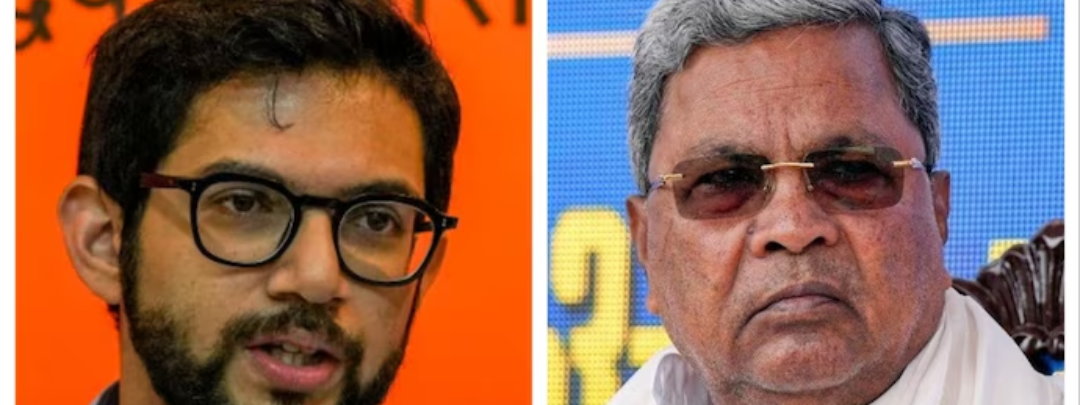
Karnataka Chief Minister Siddaramaiah dismissed Shiv Sena (UBT) leader Aaditya Thackeray’s suggestion to make Belagavi a Union Territory, calling it a “childish statement.”
Thackeray, in his demand, stated that Belagavi, a city in Karnataka near the Maharashtra border, should be declared a Union Territory, citing alleged injustice toward the Marathi-speaking population. Siddaramaiah responded, saying, “It’s a childish statement. The Mahajan (Commission) report is final. There is no room for further claims, and if Maharashtra Ekikaran Samiti (MES) protests, will we remain silent?”
Thackeray had claimed that the situation for Marathi speakers in Belagavi was deteriorating, even as celebrations took place over the formation of the Mahayuti government in Maharashtra.
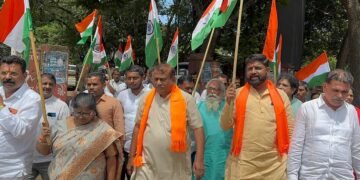
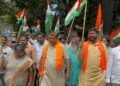
On the first day of the winter session of the Karnataka Assembly, members of MES held protests in Belagavi. The Karnataka government reportedly banned the gathering and restricted Maharashtra leaders from entering the state.
Background of the Belagavi Dispute
The Belagavi border issue dates back to 1957 when states were reorganized along linguistic lines. Maharashtra has laid claim to Belagavi, which was part of the former Bombay Presidency, due to its significant Marathi-speaking population and over 800 Marathi-speaking villages currently in Karnataka.
Karnataka argues that the boundary drawn according to the States Reorganisation Act and the 1967 Mahajan Commission Report is final. To reinforce the city’s connection with the state, Karnataka constructed the ‘Suvarna Vidhana Soudha’ in Belagavi, a replica of the Vidhana Soudha in Bengaluru, which houses the state Legislature and Secretariat.