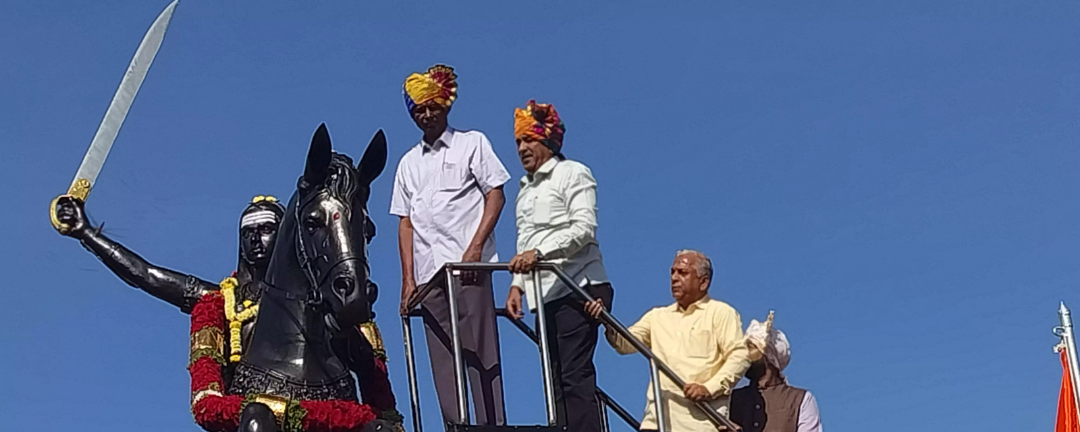
The three-day Kittur Utsav, celebrating the 200th anniversary of Rani Chennamma’s victory over British forces, officially commenced on Wednesday in Kakati, her birthplace. The event honors her courageous stand against the British East India Company, marking a significant chapter in India’s early fight for independence.
Rani Chennamma, the Queen of Kittur, led an armed rebellion in 1824 to safeguard her kingdom from British domination. On October 23, she achieved a historic victory against the British in the first battle, becoming the first Indian female ruler in the region to lead a military uprising against colonial power. Although her forces were eventually defeated, leading to her capture and death in captivity, her legacy as a symbol of bravery and defiance endures.
District In-charge Minister Satish Jarkiholi inaugurated the celebrations, emphasizing Rani Chennamma’s role in India’s independence movement. “She was the first Indian woman to take up arms against British colonization, sacrificing everything for her country,” he remarked. The Kittur Utsav not only honors her valor but also seeks to pass on her legacy to future generations.
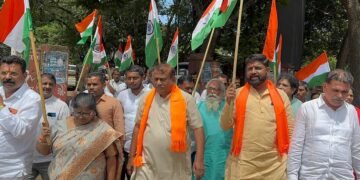
Minister Jarkiholi announced plans for additional initiatives across various taluks to promote awareness about Kittur’s history. Historian Dr. Gurudevi Huleppanavarmath delivered a special lecture underscoring the importance of remembering Rani Chennamma’s patriotism and leadership. The event commenced with a vibrant procession featuring traditional folk performances, culminating in floral tributes at the statue of Rani Chennamma.
The Kittur Utsav kicked off grandly at the fort premises, attended by Ministers Satish Jarkiholi and Lakshmi Hebbalkar, as well as Uttar Kannada MP Vishweshwar Hegde Kageri. This year marks a significant milestone, recognizing Rani Chennamma’s pivotal role in the freedom struggle against the British.
Minister Jarkiholi reiterated the commitment to allocate Rs 5 crore for Kittur’s development, announcing the relocation of the Rani Chennamma Study Centre from Vijayapura to Belagavi and the establishment of a human museum. Minister Lakshmi Hebbalkar highlighted the government’s focus on women’s empowerment, referencing initiatives like the Grilahakshmi Yojana.
Nijagunananda Swamiji of Nishkalamantapa called for the publication of books on Chennamma across universities nationwide, advocating for the establishment of a girls’ medical college in Kittur as a community demand.
The government allocated Rs 5 crore for the Kittur festival, featuring performances by regional cine stars and artists, including rapper Chandan Shetty and actress Aindritha Rai. The event will also include traditional sports like wrestling and water sports, alongside cultural programs.
The festival opened with a series of morning events, including garlanding the statue of Rani Chennamma. A procession showcased folk artists performing various traditional dance forms, while tableaux from different departments added to the celebrations.
Minister Jarkiholi remarked on the importance of spreading the message of Rani Chennamma’s historic struggle for freedom. “Many sacrificed their lives for our independence, and it is our moral duty to convey this message far and wide,” he stated.
The celebrations included a special musical event in Belagavi featuring singer Kunal Ganjawala and actor Sadhu Kokila, inaugurated by Mayor Savita Kamble. Dignitaries paid homage to the statues of Kittur Chennamma and her lieutenants, including Amatur Balappa and Sangolli Rayanna, as part of the day’s observances.