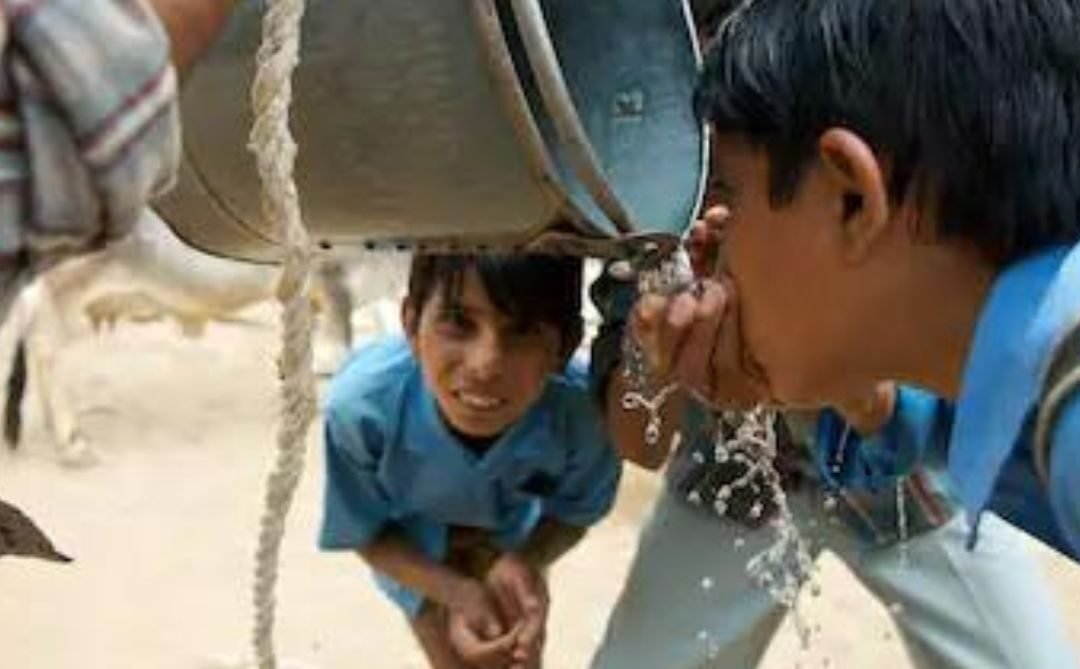
While Bengaluru grapples with waterlogging caused by heavy rains, another district in Karnataka is experiencing severe water scarcity amidst increasing temperatures. According to a Times of India report, more than 99 villages in Belgaum district are confronting this new crisis and relying entirely on water tankers for their water supply.
In response to the situation, the district authorities are reaching out to private borewells and other sources to ensure sufficient water supply.
The situation arises as temperatures soar across Belgaum district, leading to the depletion of waterbodies. In addition, numerous rivers, ponds, lakes, wells, and borewells are drying up.
Several rivers including Krishna, Malaprabha, and Ghataprabha are experiencing reduced water levels, while other reservoirs have also seen a decline. Consequently, this has resulted in a severe water crisis, causing significant difficulties for both people and livestock.
According to the report, the district is facing a deficiency in drinking water projects, with more than 220 villages receiving only one hour of water supply per week.
The Jal Jeevan Mission (JJM), which aimed to ensure round-the-clock access to drinking water, has been hindered by insufficient water sources.
Providing specifics, Deputy Commissioner Nitesh Patil affirmed that timely actions will be implemented to prevent villagers from encountering drinking water shortages. He further mentioned that water is currently being supplied via tankers utilizing borewells in certain regions, and he urged everyone to use water responsibly.
The rural and urban drinking water supply department expressed concern that without pre-monsoon rain, the water scarcity in these villages may exacerbate. The district administration revealed that water is currently being distributed through 99 tankers across 94 village panchayats, with over 35 private borewells enlisted for water supply, making 520 trips daily. A resident named Santosh from the area remarked that both Belgaum city and the surrounding villages are facing a situation where water storage is imperative.